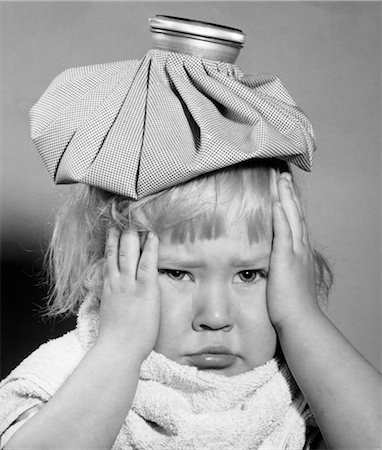
Headaches: another enigma, maybe second to tummyaches. What causes them, and how do we manage them at school?
Headaches are literally a pain in your head or face. More specifically, a headache is an activation of nociceptors (a sensory receptor for painful stimuli) in and around the layers of tissue of the brain. These nociceptors can be activated by many different stimuli including tension, increased blood flow, grinding teeth, poor sleep, nasal and sinus congestion and much more!
Fun fact: your actual brain does not feel pain, the sensory receptors are only present in the meninges, not the actual brain tissue which is why they can do brain surgery without causing pain.
Causes of headaches
Some most common causes of headaches are (this is not an exhaustive list):
- Tension/stress: most common in children and young adults, caused by the muscles in the head and neck tensing up and activating the pain receptors. Tension/stress headaches usually feel like a squeezing or pressure, pounding, generally constant and all over the head or radiating down the neck. While uncomfortable these headaches are not dangerous. They can generally be relieved by over the counter medications like Ibuprofen, Acetaminophen or Naproxen.
- Poor sleep: lack of sleep can cause both tension headaches or be a migraine trigger. Poor sleep can activate the nociceptors causing headaches. Fatigue can cause poor posture and muscle pain leading to tension type headaches.
- Poor diet: low sodium and potassium can cause a headache so if you’re dieting or maybe just were too busy and skipped a meal you might find yourself with a headache. From personal experience I’ve also found that eating too low carb causes headaches (yeah I tried that keto diet for about a year and had raging headaches the whole time!) Also lack of caffeine, if you’re a true coffee addict, can definitely cause a headache: caffeine narrows the blood vessels surrounding the brain which helps reduce headaches cause from increased blood flow. Decreased caffeine means increased blood flow which equals headache. This is also how/why Excedrin works!
- Dehydration: as mentioned above, low sodium can lead to headaches, but also when you’re low on fluids in general your brain tissues can shrink which puts pressure on the nerves around your brain causing pain. Keep your brain nice and plump!
- Poor posture: poor posture causes tension in the back and neck which can lead to pain in the back of the head and neck.
- Nasal and sinus congestion/colds: If you have inflamed or congested sinuses they are causing pressure on the brain, eyes and facial area which will cause a frontal headache.
- Hormones: drops in estrogen levels can cause a headache and are linked to migraines. For those that menstruate, you might find that right before your period when there is a drop in estrogen you have headaches. For those who are perimenopausal or menopausal you may struggle with headaches due to lack of estrogen production.
- Eye strain/screen time: Making your eyes work too hard whether from too much screen time or not wearing your glasses makes the eye muscles contract too much activating the pain receptors in that area. It’s important to take breaks from screens periodically and always wear your glasses. It’s also important to have regular eye exams to ensure that your glasses prescription is up to date if applicable.
- Elevated blood pressure: this gives an all over pounding pulsing headache.
Types of headaches
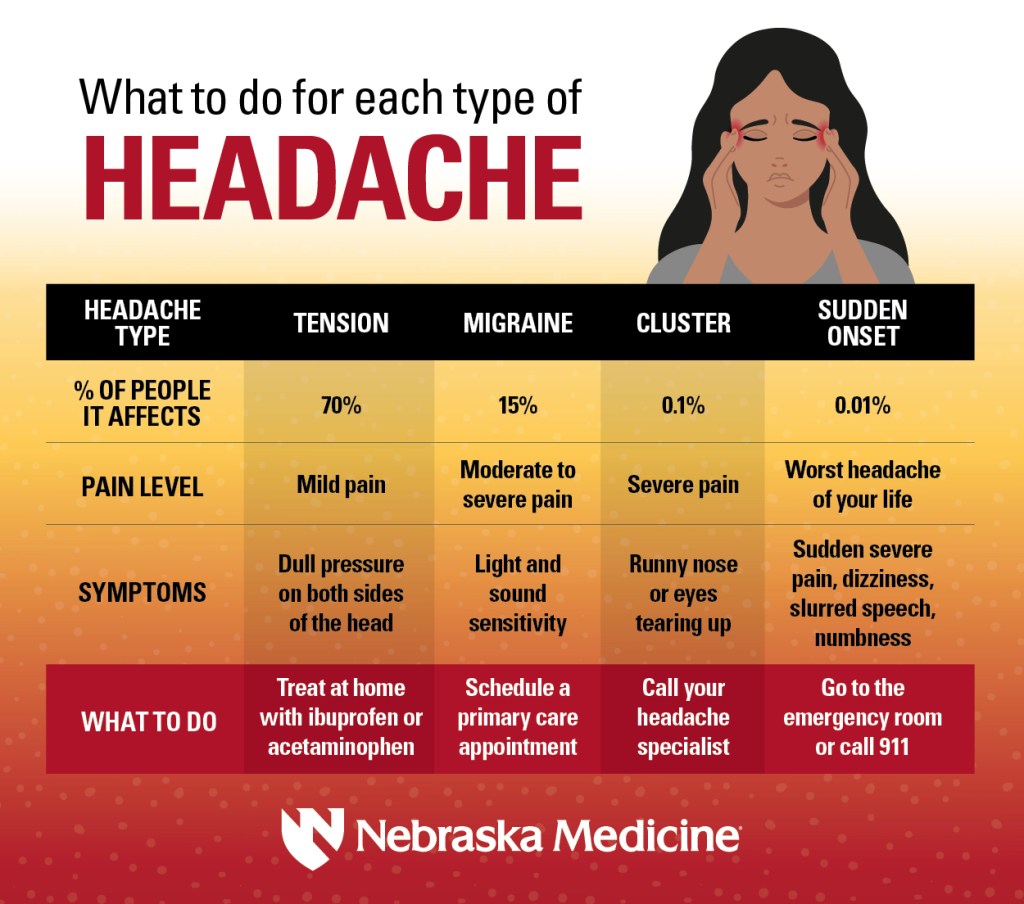
- Migraine: A migraine is a headache that can cause severe throbbing pain or a pulsing sensation, usually on one side of the head. It’s often accompanied by nausea, vomiting, and extreme sensitivity to light and sound. Migraine attacks can last for hours to days, and the pain can be so severe that it interferes with your daily activities.
- Tension: most common in children and young adults (and school nurses!), caused by the muscles in the head and neck tensing up and activating the pain receptors. Tension/stress headaches usually feel like a squeezing or pressure, pounding, generally constant and all over the head or radiating down the neck. While uncomfortable these headaches are not dangerous. They can generally be relieved by over the counter medications like Ibuprofen, Acetaminophen or Naproxen.
- Cluster: Cluster headaches, which occur in cyclical patterns or cluster periods, are one of the most painful types of headache. A cluster headache commonly awakens you in the middle of the night with intense pain in or around one eye on one side of your head. Bouts of frequent attacks, known as cluster periods, can last from weeks to months, usually followed by remission periods when the headaches stop. During remission, no headaches occur for months and sometimes even years.
Assessment
When a student complains of a headache at school you will need a little bit of information about what’s going on so you can decide how to adequately treat their symptoms.
- Where does it hurt exactly? This can help you pinpoint better what type of headache they are having and if it might be related to poor vision, not wearing glasses, new onset of a cold, or maybe ear pain mistaken for headache pain.
- What were you doing when it started? Were they in a loud room? Straining to see the board in class? Getting ready to take a test or do a task they don’t want to participate in? Doing strenuous physical activity? Is it superficial pain from a new injury?
- Are there any cold symptoms or fever present? We know that nasal and sinus congestion can cause a headache, and a fever will very likely cause a headache also. Definitely check a temperature to be sure.
- Does the student have a history of headaches or migraines? If they have a history of headaches or migraines you may already have an action plan for them to treat their headaches.
- Does the student have a recent history of head injury or concussion? If they are post-concussive they are likely to suffer from headaches for a few days or weeks. You should have an action plan of some sort for this already.
- Has the student eaten or drank fluids today? if so what fluids? As we know now, not eating and dehydration are our biggest culprits for headaches. If the only fluids they had today was soda or coffee then they could still be dehydrated because caffeine dehydrates you (even though it can also help a headache, it could also cause the headache).
- Are they on any medications or had any medication changes that might cause headaches? Some medications can cause headaches such as SSRIs like Zoloft when first started. Others like Adderall or ADHD stimulants can raise blood pressure causing a headache as well. Additionally, you want to make sure they haven’t already taken something that would interact with medicine you might give them.
- Check a blood pressure: elevated blood pressures can cause a pounding headache, especially if they don’t normally have high blood pressures.
- If applicable, is the person using alcohol or illicit drugs and are they possibly hungover?
What can you do about headaches at school?
- W.O.W: Water, Oxygen, Wait. have the student drink some water – like 8 ounces or more. have them sit down and take about 10 slow deep breaths. have them wait about 30 minutes and see if things have improved or not.
- Hydration: The student needs to be sure to drink lots of water. Alternatively, Gatorade/Powerade, sports drinks and juice with sugar in it can help with hydration. It also helps to have a little bit of salty food along with the water (assuming it’s not blood pressure related) because water follows sodium so you will retain the fluids if you add a little salt (that’s why Pedialyte tastes like salty juice)
- Eat a balanced meal: They need to eat! A balanced meal that includes vegetables/fruits, carbs, and something with sodium and potassium would of course be ideal but anything will do even if it’s just crackers.
- Have them lie down in a quiet dark room for a bit and relax. You can even show some deep breathing or meditation techniques for relaxation.
- OTC meds: Try Ibuprofen or Acetaminophen as directed by standing orders and/or parents permission. You want to know if they have already had any other medications like Dayquil, Ibuprofen or Acetaminophen already so they don’t accidentally have too much. make sure they don’t have an allergy to those medications. make sure you have appropriate consent to give those medications. If the student has an empty stomach be sure to have them eat something along with these meds to avoid upset stomach.
When do you need to worry about a headache?
- Thunderclap headache: a sudden onset of severe head pain not associated with a new injury. It is indicative of aneurysm rupture or bleeding in the brain and you should call 911.
- Headache accompanied by extremely stiff neck and fever: this is indicative of possible meningitis and needs to be addressed immediately.
- Headache associated with loss or change of consciousness: This can be indicative of many things such as a stroke, a head injury, or an aneurysm rupture. This is an emergency and you should call 911.
- Headache associated with head/neck injury: A severe head injury or neck injury should be addressed emergently.
Headache hacks
- W.O.W as listed above: Water, Oxygen, Wait. have the student drink some water – like 8 ounces or more. have them sit down and take about 10 slow deep breaths. have them wait about 30 minutes and see if things have improved or not.
- Salt: If attempting to hydrate have the person eat something like potato chips or pickles along with the water. As I mentioned, water follows sodium and their body will retain the fluids better with some sodium on board. Just be sure that headache isn’t related to high blood pressure as this will make blood pressure worse.
- Tapping: There is tons of literature for EFT tapping for headache relief but in a nutshell sit in a quiet, dark room and with one or two fingers from each hand firmly tap 10 times above the eyebrow, on the temples, below the eyes, near the TMJ, then on top of the head. Repeat this cycle a few times while also trying to breathe and focus on the tapping. Here is the video I like for this: https://www.youtube.com/embed/htDzY6kmau8
- Acupressure: take your thumb and forefinger and push them together. in the middle of that area there will be a slight bulge of muscle. Take your other and and squeeze that spot for a few minutes. There are devices that also help with this that look like a little clip that you put on there to give the pressure.
- Ice: some people love a good ice eye mask or headache helmet. Personally I feel like it makes my headaches feel worse so I avoid but worth a try!
- Peppermint oil or other menthol oils: mixing peppermint essential oil with a carrier oil and applying it to the temples can help with a headache. Also, inhaling any sort of menthol type of oil can help clear sinuses. This isn’t something for nurses to use at school though as there may be allergies or sensitivities to these items.
- Horseradish. Not kidding! Just smelling it can clear the sinuses and open nasal passages. They even make a nasal spray with horseradish and cayenne pepper (I do NOT recommend unless you’re very brave because it kind of hurts a lot but it works!)
- If you are a chronic migraine or headache sufferer like myself, you are probably willing to try literally anything to get rid of a headache. Here is an article outlining all sorts of things you could try: https://www.healthline.com/health/migraine-herbal-home-remedies-from-around-the-world#butterbur
https://my.clevelandclinic.org/health/diseases/9639-headaches
https://www.healthline.com/health/lack-of-sleep-headache#sleep-and-headaches
https://www.ncbi.nlm.nih.gov/pmc/articles/PMC5784553/

 School Nurse Headquarters