What Should You Include in Your Classroom “Care Packages”?

*This post contains affiliate links*

I don’t know about everyone but this school nurse likes to provide little care packages to all the teachers at school for managing minor booboos and issues in class. After all, one of our main goals is to keep butts in seats and not running to the nurse all the time, right?

I have a few different packs that I make up and refill throughout the school year.

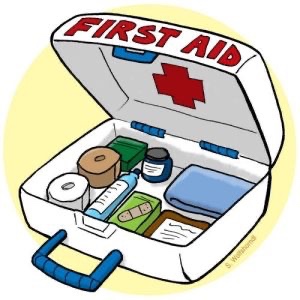
The first packs that I make are general classroom first aid kits. I use a gallon size ziplock bag and place inside bandaids, antiseptic wipes, and gloves. This gives the teachers the ability to handle simple cuts and scrapes without sending the student out of the classroom and risking missing valuable learning time. I also include tooth keepers for the lost teeth that aren’t a bloody mess so the teacher can quickly handle that situation.

I have nosebleed kits stored in a few places within my building also – the main office, the lunchroom, and in the lunchroom for the recess aids to access for outside (you can keep the recess kits wherever it’s convenient for your recess aids). These include a gallon ziplock bag that has multiple ziplock sandwich bags containing individual kits. Each kit includes paper towels – bounty or something absorbent, not the brown waterproof ones known to be at schools, gloves for the person helping with the nosebleed, the nose clips for help squeezing the nostrils, and an instruction sheet for nosebleed first aid. This idea is not to prevent students from seeing the nurse for a nosebleed but more to give the adult directly in charge a chance to give the student help immediately and then get the student to the nurse for further assistance if needed. Often I get students who have nosebleeds just walking to my office and bleeding all over which is not necessary at all.

The next kit that I have is a field trip kit. I have string backpacks containing first aid things like bandaids, antiseptic wipes, and gloves but I also include in this one ace bandages, hand sanitizer, and disposable barf bags – my school is K-5 and you know how those little guys can get bus-sick!! I also include a folder with information about using an epi-pen, using an inhaler, first aid for seizures and asthma, and a general first aid guide for the teachers in charge. I don’t go on the field trips but I do like to make sure the staff going in the trips are trained to handle situations. I am including a link below for an Epi-Pen trainer for educating staff to use them.

Aside from all of these kits, I have a first aid kit placed in the main office with the general things – bandaids, antiseptic and gloves, and tooth boxes for lost teeth. In the off chance that I’m not around they can help a student. I also keep a first aid kit in a go bag with the usual stuff plus ace bandages and hand sanitizer for fire drills along with a folder and a pen to record anything that happens outside the building. I also give the Physical education teacher a pre-made first aid kit but also periodically refill his bandaids as I feel like the prepackaged first aid kits tend to have a lot of things we don’t really need (also the PE team should have their own budget to handle that stuff but I’m always willing to help).

So, happy packing! I hope this helps everyone get this task out of the way! Of course students and teachers should consult with the nurse about anything and everything they are concerned about but it’s helpful to everyone when the teachers and staff can handle some things quickly and quietly. Remember that even though kits are provided and education is given that you should be available for further education and assistance.

Scroll down for clickable links to all the items I mentioned! Do you have things that you like to include in your kits? let me know!

Just a tidbit about Coronavirus:

I am posting this from Facebook – this is a post by an Emergency Trauma Center doctor I used to work with. Her opinion and practice are well respected by myself and many others.

By Traci Ryan, Emergency Medicine.

“I’ve seen and heard several opinions about Corona (Covid 19) floating around and I thought that I’d weigh in strictly with some numbers, noting that the numbers are constantly changing as more data is available.
With that, please be careful comparing covid-19 and flu; Flu season is winding down and the stats are already in, “corona season” is just getting started.

From an epidemiological standpoint there are a few things to focus on when evaluating an infectious disease. Here are two of the important ones:
1- how contagious is it? For every flu positive person, that person infects an additional 1.2 people. In the case of Covid-19, every positive patient infects 2-3 people. So it’s at least twice as contagious as flu
2- how deadly is it? Flu kills 0.1% of people infected. The covid-19 mortality rate is a moving target at this point. Northern Italy reported a mortality rate of 5%. China around 3%, South Korea about 1%. Nonetheless all currently reported numbers are at minimum 10x that of flu

Based on current numbers and spread of the disease, epidemiologists have concluded that 60-70% of the entire world population will have Covid-19 within the year.
So let’s sum this up and keep the numbers on the conservative side, because as I mentioned above, the data is constantly evolving:

If only 50% of the United States gets infected with Covid-19, with a mortality rate of 1%, thats 1.65 million people dead. 1.65 million. Flu has killed approximately 650,000 in the entire world, approximately 33-50k in the United States.

Assuming that Covid-19 is something lesser than it is without all of the data could be, literally, fatal. I wouldn’t take it too lightly. Hopefully in the next few weeks the numbers will look a lot more promising. No need to panic but please be cautious.”

Managing Colds and Viruses

*Sniff sniff…cough cough….* Get the tissues and the Vitamin C because it’s cold and flu season. It seems like it never ends with these kids – the snots and the coughing and the moaning. So what can we do about it? Should we send them to school? Should we send them to the school nurse? Doctor? Should you give them medicine?

*Disclaimer: Always consult your Pediatrician before giving any medicine, especially cold medicine. You need to read the box or the insert and understand what you are giving, correct dosages, and possible side effects and interactions with other medications. Often pediatricians can tell you the correct dosage where the box says “consult pediatrician”.

So what works and what doesn’t? What can you do to be able to send your kid to school or daycare and feel OK about it? I’m actually learning about some misconceptions and new studies myself that show what is useful and what isn’t.

What works?

Hydration is key

Hydration: water water water all day long. Water till you pee all day. Hydration helps to thin mucus so it can go away easier. You can try warm tea (Non-caffeinated) with honey and maybe lemon in it, water, sports drinks, or even juice. Just avoid soda, coffee, and other caffeinated drinks because they will contribute to dehydration or at least not contribute to hydration.

Hand washing

Hand washing: A no-brainer really. While hand washing won’t actually cure anything, it helps prevent the spread of viruses and bacteria. It’s important to wash hands under running water using soap when available, taking the time to rub them together and rinse well, drying with a disposable paper towel. Alcohol based hand sanitizer will do in a pinch but hand washing is best – especially for visibly soiled hands.

Rest

Rest: Your body needs rest when it is sick. Sleep helps build the immune system and allow the body to heal. The less work you are doing with your body the more energy it can devote to getting better.

Neti pot

Nasal Saline: Using over the counter nasal saline can help with nasal and sinus congestion tremendously. You can use the kind that comes in a convenient squirt bottle (Like Ocean) or sprays (like the Arm & Hammer one https://amzn.to/38Vnm29). You can also use a Neti Pot with saline for a sinus rinse: this doesn’t always work for everyone (personally I don’t care for the Neti Pot because I don’t get the amazing cleanse other people get but I keep trying!) I have one like this: https://amzn.to/38UOYob

Over the Counter medications

Over The Counter Pain relievers: Ibuprofen (Motrin, Advil), Acetaminophen (Tylenol), Naproxen (Naprosyn, Aleve) can help relieve aches and pains, fevers, and headaches. Be very careful though because many prepared OTC cold medicines already have some of these in them and you would be taking too much if you combine them. This is especially important concerning Acetaminophen containing products as overdosing can be catastrophic. For kids dosages you should consult your pediatrician as they will have the most correct, up-to-date information for you.

Over the counter cold medicine

Over the Counter Cold Medicines: DayQuil, NyQuil, Robitussin, Pseudoephedrine, Delsym, Mucinex, you know, all of those. These are Ok generally for adults but it’s not really recommended to use many of these medicines for kids, especially those under 6 years old. Your best bet is to go with Benadryl but that is likely to make a kid (or adult) sleepy so it’s better used at home. As always, call the pediatrician and see which medicine they recommend before giving anything to your child. Be aware that many decongestants can cause a fast heart rate or other unwanted side effects, especially in those who are already diagnosed with any kind of heart issues. Use these types of medicines sparingly and with caution if at all.

Steam can help relieve congestion

Humidifiers/steam: Steam is a great way to help alleviate sinus congestion, among other things. Steam not only moisturizes the mucus membranes but it helps thin mucus so it can drain. Steam is also great for kids with croup. An adult can take boiled water in a bowl, lean over the bowl with a towel over their head and breathe in the steam – probably avoid this method with kids because they have a greater risk of getting burned by the water. For a child, you can have a cool mist humidifier placed near them, or turn on the shower on the hottest setting and close the bathroom door and enjoy the sauna.

Chicken soup

Eat: Don’t forget to eat. Your body needs all the vitamins and calories to help fight whatever illness you have. It is a researched and proven fact that nutrition plays a major role in healing. We all know that when you’re sick you are supposed to eat chicken soup. That’s sort of true – chicken soup is hot, steamy, and full of vitamins that our body needs but has no actual “healing properties”. It also brings comfort and relaxation which helps with healing as well.

Raw, local honey is always best

Honey: Honey has antimicrobial properties and has been proven to help fight some bacteria and viruses. We all know that you make hot tea with lemon and honey when you are sick and it helps soothe a sore throat and cough. You can also eat honey right off a spoon while you are sick! Using raw (unprocessed) local honey is your best bet because it hasn’t been heated and processed. You can usually find it at local farmers markets, online, or check in local groups for who has bees and is making honey at home. It is super important that everyone knows that it is NOT SAFE to feed honey in any form to children under 12 months old as it can lead to infant botulism – a very serious illness that causes severe muscle weakness and sometimes death.

Elderberry has healing properties

Elderberry: Elderberry, while not officially proven to be a reliable remedy, has been used for centuries to help boost immunity and help fight off colds. According to The Cleveland Clinic, studies have shown that those who took elderberry syrup saw cold And flu symptoms clear up and average of four days earlier And the symptoms were less severe than those who didn’t take it. It’s not a cure but it definitely cant hurt! You can buy elderberry products at the store like Sambucol or Zarbees or you can make your own. I like to use this Zarbees elderberry for my child: https://amzn.to/2HWH0i9 Scroll down for the recipe for elderberry syrup. I bought this kit from Amazon that had all the ingredients already put together except for the honey: https://amzn.to/2SURTY9

Raw apple cider vinegar

Apple Cider Vinegar and other homeopathic remedies (Bone broth, garlic, cayenne, raw pineapple juice): All of these are shown to also have antiviral properties. Apple cider Vinegar must be the raw kind with “the mother” in it to be effective – Braggs is usually a good brand https://amzn.to/2T8v7Lv . I like to make a homemade “cough syrup” with ACV, minced garlic, grated ginger, cayenne, a splash of honey and a little bit of raw pineapple. It tastes like salad dressing from Hell but also truly helps coughs and sore throats some. Scroll down to see the full recipe for the natural cough syrup.

Influenza vaccine

Flu shots: While not 100% foolproof against getting the flu, getting a flu shot is better than not getting one. They don’t protect against every strain of the flu but they do help the severity of the symptoms often. People with pre-existing health issues such as asthma, or immune deficiencies, or are babies and elderly should definitely get a flu shot. Those who are around People who are at risk for complications from the flu should also get a flu shot. Misconception: the flu shot does NOT give you the flu no matter what you’ve heard from your friend’s aunt’s cousin’s hairdresser’s personal experience. Some side effects of the flu shot are flu like symptoms which can really stink in itself, and often the flu shot doesn’t cover all strains of the flu but most of the time it’s a good idea to get it. Here is info from the CDC regarding Flu Shots: https://www.cdc.gov/flu/prevent/flushot.htm

What doesn’t work?

Antibiotic resistance

Antibiotics: Antibiotics do not work on viruses. I’ll say it louder for those that didn’t hear me: ANTIBIOTICS DO NOT WORK ON VIRUSES! Antibiotics are used to kill bacteria, not viruses therefore demanding an antibiotic for a cold is just building your body’s resistance to the antibiotic and allowing for more antibiotic resistant bacteria to develop. Ever notice how they keep inventing stronger, newer antibiotics? That’s why.

Zinc

Zinc: I got duped on this one as I’m currently taking zinc for my cold I have right now. While there have been studies that showed taking zinc for a cold starting at the first signs of symptoms would reduce the duration of the cold, it turns out that the studies weren’t that good. They didn’t really study enough people for long enough to make a good determination. Zinc can have unwanted side effects too, especially if taken in high doses – anemia, copper deficiency, and nervous system damage among other things. Don’t bother wasting your money on it. https://www.mayoclinic.org/diseases-conditions/common-cold/expert-answers/zinc-for-colds/faq-20057769

Always wear a coat when it’s cold

Wearing a coat/hat/Avoiding wet hair: Yes you should always wear a coat And hat and Gloves and warm clothes when it’s cold out but not doing so won’t “give you pneumonia” as grandma always says. Being super cold can lead to things like hypothermia or frostbite though so still stay warm. The reality is that warmth and moisture breeds bacteria so you’re more likely to get sick in a warm place than a cold place.

Essential oils

Essential oils (depending which ones and how they are used): There is varying levels of essential oils being useful and not useful. Yes it has been shown that inhaling oils like eucalyptus or peppermint or menthol type ones can aid in clearing congestion, Tea Tree oil is great for a lot of things, so is peppermint oil and oil of oregano, but the reality is that essential oils rubbed on feet and diffused or consumed in teas don’t do a whole lot. They don’t purify the air, they don’t fight any bacteria within the body, they don’t balance your body’s “vibration”. None of it. They smell good. They make you feel like you’re doing something. It’s not worth the money wasted. Here is a podcast where they discuss some of the information pertaining to use of essential oils for medical treatment: https://gimletmedia.com/shows/science-vs/5whm7x

Take care of yourself, do the best you can and as always, if you are sick stay home! If your child is sick, keep them home! There is no cure for the common cold but at least we can take steps to prevent and shorten it when we do get something.

As always, head to your local Dollar Tree for all things disinfecting! Hand sanitizer, wipes for disinfecting surfaces, gloves,and most other cleaning needs!

Recipe for elderberry syrup
Recipe for ACV cough syrup

As always, don’t forget to visit my TPT store for fun prinatbles

https://www.teacherspayteachers.com/Store/Your-Favorite-School-Nurse

Is It an Emergency?

Calling all the stressed out school nurses trying to navigate through the real emergencies, paperwork, screenings 504’s and IEP’s and minor injuries/illnesses! Are you inundated with kids who sneezed once or bumped themselves on a desk or door? Kids with loose teeth or dirty clothes?

We school nurses have a ton to deal with all day. It can definitely get difficult to get through it all. An important helpful factor in managing your health room is communication with teachers and staff. Everyone needs to be on the same page.

Teachers and other staff have the right and the ability to triage students they are sending out of their classrooms and make a determination as to whether it is an emergency or can wait. They are allowed to tell the student with a stomachache to wait, or tell the student with a loose tooth to wait it out and stay in class. The goal is to keep the kids in class anyway right?

You need staff to understand and respect your health room hours and allow you to wade through all the work you have for each day. One way for them to help you is to understand what things are actually an emergency and what isn’t. It’s understandable that someone who isn’t medical may not know how to handle possible medical issues but at the same time, they are teachers and they know the kids and can make that determination in most cases.

The first thing you need to do is to establish set health room hours and let everyone know. It can be tough to get everyone to follow the hours if you haven’t already established something like this. I have made multiple signs which I email out to the staff periodically and also have posted in multiple areas in my school – including my door. Your health room hours can be whatever works for you. If you need to give yourself two hours in the morning to get your screenings and computer work done and an hour or so in the afternoon to get documentation done then do what works. Some people are more comfortable having an open door policy or a locked door policy.

Next, you have to establish what is considered an emergency and what is not. Understandably, many people who are not medically trained have no idea what is or isn’t an emergency and may think that everything or nothing is an emergency. You can communicate this information to all staff to help be sure everyone is on the same page.

Some examples of emergent reasons to be seen by the school nurse are:

1. Bleeding: excessive bleeding, difficult to control bleeding, needs more than just a band-aid. Paper cuts, small scrapes, etc can either wait until the nurse is available or a staff member can dispense a band-aid if one is available.

2. Breathing Bad: Short of breath at rest, asthma, wheezing. “Out of breath” from playing at recess or gym or sports is not an emergency.

3. Broken: Obvious broken bone, excessive swelling, inability to walk or use body part. Banged knees, bumped elbows, other minor bumps and hurts can wait.

4. Barfing: Vomited more than once, witnessed by staff, visibly ill. A kid who reports that they vomited in a trash can in the bathroom when no one was around and is obviously well is certainly not an emergent issue. Often they vomit from coughing, or little kids choke and have a bad gag reflex, or they get stressed out. Vomiting is not always an emergency or even always an indicator of sickness.

5. Bee Sting: This is self explanatory. Bee stings hurt like crazy and should be handled right away, especially for a person who may be allergic to bees (documented allergy), or a person who is exhibiting symptoms of an allergic reaction (you might not always know they are allergic till it happens.)

6. Burning Up: Obvious fever, feels hot to touch. Fever over 100.4 should be sent home and stay home until 24 hours fever free (as a general guideline but some districts may have different rules).

7. Big Bump: Witnessed head injuries resulting in bruises, bumps, change in mental status or bleeding. “I bumped my head on a wall while in the bathroom/walking down the hall/etc etc” and they don’t have any concerning symptoms then it is safe to wait for the nurse to be available. Chances are, when they wait a few minutes they will forget about it.

8. Seizures: A student or an adult who is having a seizure should be addressed immediately. Call the nurse right away and note the exact time the seizure started so the nurse can time it. In general a seizure lasting greater than 5 minutes will require a call to 911 and possibly emergency medications if available.

9. Allergic Reactions: Someone who is short of breath, has hives, wheezing, facial swelling, tongue swelling, difficulty speaking, change in mental status, loss of consciousness, or has a known allergy and has been exposed to the known allergen should emergently see the nurse (or call the nurse to come to the scene). Hopefully the student has an Epi-pen if there is a known allergy but 911 and parents should likely be called depending on the situation.

10. Diabetic Emergencies/Management: A student who is a known diabetic and is experiencing loss of consciousness, changes in mental status (drowsy, confused, speech slurred) should be seen immediately. A student who is a known diabetic and feels that he needs a blood sugar check or feels unwell should be permitted to see the nurse immediately. A student who has scheduled times to manage blood sugars and insulin should see the nurse at the correct times.

11. Any student with a known medical condition that may require nursing intervention should be sent to the nurse as soon as possible.

What is NOT considered an emergency?

1. Potty Accidents: For my district potty accidents are not a nursing issue. The students should have extra clothes but if they don’t then parents should be called to bring them clean clothes. Check with your nurse to see what procedure is.

2. Seasonal Allergies: There is nothing the school nurse can do to manage seasonal allergies in school unless a student has medications that have been ordered by the doctor and the proper paperwork to dispense it. In general, if a student has allergies then it should be managed at home. A parent can always be called to address the issue if needed but it is not an emergent issue.

3. Mosquito bites/bug bites (aside from bee stings): In general, not an emergency. The nurse (in my district) can administer Hydrocortisone cream to an itchy bug bite but for the most part they have to wait it out.

4. Loose Teeth: Definitely not an emergency. A teacher is more than welcome to explain to a student that loose teeth are a natural, normal part of life and need no intervention aside from wiggling it till it comes out and the occasional mouth rinse if bleeding. Loose teeth may bleed, and they may be sore but such is life. Some nurses may be comfortable with pulling teeth but I choose not to do that as I feel it is a procedure that some parents may not prefer I do. It’s safer to just not do it.

5. Minor cuts and scrapes with or without bleeding: if the nurse is not available then the student can wait. If the teacher has bandaids then they may give one. A student may stay in class until it is an appropriate time to leave.

6. Dirty Clothes/got water on them/spilled food: This is not an emergency. Water dries, food can be wiped off. Chronically unkempt students should be addressed by the nurse and/or the counselor but it is not emergent to leave a class and manage unless the teacher feels it is an appropriate time.

Another idea that I learned that one could try is a “sick bench” for recess. In general students should not be leaving recess and lunch to visit the nurse as they have greater ability to wander or be away from their class without permission. Often, if they complain that they are sick at recess, have a tummy ache, or bumped themselves on something they can have a time out on the sick bench and take a break. You will notice that often waiting a few minutes cures them. Pain subsides, tummy aches from running around and playing hard will subside on their own.

A teacher or staff member has the ability to triage students health needs and make the call if they need to leave class right away and see the nurse or if they need to wait until the current lesson is finished before leaving. As always, everyone has the option to call the nurse and ask questions or discuss issues they have concerns about.

This is not an issue of “the nurse doesn’t want to see kids” but an issue of trying to keep the kids in their classes and cut out extraneous wandering about the school, and staying out of class. Our responsibility is keeping butts in seats as much as possible by keeping sick kids out and healthy kids in their classes.

Update: Here is a Google Slide deck of this article for your convenience: https://www.teacherspayteachers.com/Product/Is-It-An-Emergency-presentation-8154471
Why Is It So Hard To Be A New Nurse Among Experienced Nurses?

We’ve all heard that little expression “nurses eat their young” and give a little giggle because #newnurses, right? They are often young, inexperienced in nursing, inexperienced in life and in need of guidance by more experienced folks like ourselves.

I’ve seen and experienced this type of bullying among nurses throughout my career in healthcare and it really burns me up. It’s not even always “older” nurses or more experienced nurses but other nurses in general who feel like they have something to prove to whoever else they can try to bully into a false “respect”. In my experience it has also been my peers who were at exactly the same level of education and experience as myself attacking because they thought they could.

I’ve been on both sides of this. I have seen both how it feels to be irritated by some 20 year old hot shot who thinks they know everything right out of the gate, and how it feels to be the noob getting bossed around by everyone who thinks they know better.

I’ve seen fresh out of the boards noobs walk onto the unit and declare “I’m bored” or even better “I have my master’s degree and I’m better than you” before they even got a chance to see or do anything. Put. Your. Time. In.

I’ve been on the receiving end of older nurses saying to my face “You can’t tell me anything because I’ve been at this for longer than you and you don’t know anything!” I’ve been a fairly inexperienced team lead where the others just roll their eyes and do whatever they want because they can, not giving me the chance to prove myself.

What frustrates me the most about this whole topic is not so much “older” nurses bullying newer nurses, but the concept that some of the more experienced nurses just assume that someone new to them is also new to everything. Just because I’m new to your unit or to this particular job does not mean I am totally clueless. Just because I look younger than I am does not mean that I am young and stupid.

I’ve started on a new unit and had nurses with experience on that unit speak to me like I was a child and try to explain things to me like how to spike a bag, or how to manage a stretcher (FYI, once upon a time, I was a stretcher pushing PROFESSIONAL), or how to do an EKG (again, EKG pro here! I can’t read them that well admittedly, but I can perform one with the best of them!). I had them be shocked and amazed that I can pop in an IV like it wasn’t that hard – Bruh. I was an ER nurse. That’s what we do. Why all the shock that the newbie knows how to do her job?

Now I’m not saying that we shouldn’t all be open to listening and learning because that is one of the most important things about being a nurse – learning! Everyone from the nurse of 35 years to the nurse who is still studying for their boards should be open to learning new information, procedures, evidence based research, and best practice for patient care.

We should be listening to each other and giving a mutual earned respect for each other’s education and background. New or old, we all have a unique life experience that shapes what we know and what we do. A new nurse might be more up to date on current policies and procedures which an older nurse may not be aware of because “we always did it that way”. An older nurse should be listened to because she’s done the things, put the time in, and learned what works and what doesn’t.

Currently I’m working as a school nurse, as you all know. I’m fairly new to this particular area of nursing but certainly not new to being a nurse, dealing with kids, dealing with adults and parents, or understanding pediatrics in general. We weren’t given an extraordinary amount of training for this specific job compared to the many months of intense orientation on the critical care units in the hospital that I’m used to. We (the almost 300 nurses in the network) kind of rely on each other to understand our specific policies. It doesn’t mean I don’t know how to be a nurse, it just means I don’t always know the very specific details of some policies just yet.

My message for the new nurses, younger nurses, or new-to-this-unit nurses is this: listen to the ones with experience. Be open to learning always. No matter how many years of experience you get under your belt, there’s always something new to learn. Be teachable. Don’t walk into any unit and assume you know everything and can take charge. Go ahead and get your master’s degree but understand that it’s a piece of paper and classes you took, not real life experience. Get. The. Experience.

My message to the experienced and older nurses: Don’t assume the new people are young, dumb, and annoying. Don’t be offended when a newer nurse tells you something you didn’t know. Give constructive criticism without tearing the other person down. Be a teacher. Be a supporter. Be an encouragement. Don’t be a jerk.

Environmental Health and Your School: What You Need to Worry About (and What You Don’t). Part 1: Asbestos

We’ve all seen on the news lately about Philadelphia schools closing left and right over damaged asbestos and other possible toxins being found in the old buildings. There is a lot to be concerned about with this issue, but there are also some misconceptions. What are we to do if we are concerned about environmental toxin exposure in our buildings?

The biggest things we need to be worried about in the buildings we spend our time in is the DAMAGED asbestos, flaking lead paint, mold growth that isn’t easily visible, and mouse/rat/vermin infestations. I’ll get into why we do and why we don’t need to worry about this stuff!

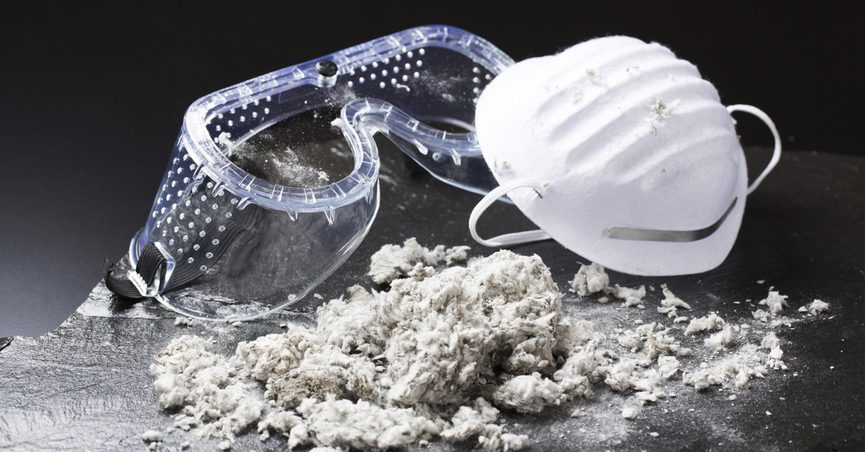
I’ll get right into the big one that we are all worried about right now: ASBESTOS! Asbestos is a naturally occurring fibrous mineral found in some rocks that was discovered to have fabulous properties of being impervious to fire, damage or destruction. Asbestos is basically very tiny fibers that are not really able to be seen with the naked eye but when combined with other materials it was very useful. After its discovery it was used in lots of construction materials because it seemed like a really great find. They put it in literally everything from building insulation, roof tiles, floor tiles, wallboard, cement, even some types of heating unit parts (since it’s fireproof, it’s great on a heater because it won’t burn up). Asbestos is currently banned in over 60 countries but currently still a legal and used material in America. According to Dr. Frank from Drexel University’s Environmental and Occupational Health, after 1986 all schools are required by law to be inspected twice a year for loose or damaged asbestos and the reports for each school be made available to the public.

Why is asbestos such a big deal then if it’s so great? Well, it has two properties that make it awesome and also terrible: it’s indestructible and it’s made of almost invisible fibers. When you have loose fibers that are not contained in some other material and they make their way into your lungs those fibers are stuck there. Since the fibers are virtually indestructible and practically invisible they aren’t going to go away. As long as those fibers are stuck there they are blocking your air exchange from working like it should and they are causing your lungs to develop scars which further damages your ability to breathe effectively. Aside from permanent irreparable lung damage, the stuck fibers will can also cause lung cancer or a cancer called Mesothelioma, and other cancers like ovary or throat and mouth cancers. This. Is. A. Big. Deal.

If construction is being done or the suspicion of damaged asbestos is present then a professional will need to inspect and abate the asbestos correctly. The inspectors will visually assess the areas in question and determine what needs further testing and what material if any is visually identified as asbestos. The professional inspectors will take material samples and air samples collected in a filter system and examine it under a microscope to determine the presence of asbestos. They compare the findings to a scale of “safe” levels (because there are safe levels??) and then make a plan for abatement (removal) of said asbestos.

The removal of the asbestos should be performed by a trained licensed professional. They will follow the set standards by the EPA and OSHA (among others) for safe removal and cleaning. Generally this involves plastic shields to close off the areas, hepa vacuums which capture the fibers in their filters, and proper removal techniques. People who are not wearing respirator masks or are not trained in asbestos management should not be present in the home or building while this procedure is taking place. The air and material samples must be clear before anyone can inhabit the area safely.

If you are spending your time in a room with all intact asbestos walls, floor tiles, roof shingles, etc, then you likely have nothing to worry about. As long as everything is confirmed intact and not falling apart then you’re good. If you are in a place, however, with known asbestos insulation, broken floors, broken walls, or any kind of non-intact asbestos product then you are at risk. It takes a fairly long time of being exposed to the asbestos to actually become sick from it. Not everyone who is exposed will develop asbestos related disease. If you suspect that you or your child are being exposed and seeing any related health issues (chronic respiratory problems, worsening asthma) then you should definitely have an evaluation by a doctor.

If you think you or anyone is being exposed to loose asbestos some symptoms to look for are: constant dry cough even though they aren’t sick with an obvious cold, wheezing, worsening of existing asthma, shortness of breath (aside from a normal cold), and chest pain and/or chest tightness. Some people that have been exposed for a long time – many years – may experience bowel obstruction, weight loss, cancers of lungs and ovaries, or “clubbed” fingernails (the fingernails take a rounded shape and curve over, this is a symptom of chronic respiratory issues, among other things).

If you suspect that you are exposed to asbestos in the school building, the first thing to do is contact the administration in that school (principal, assistant principal). You can also contact the school district and voice your concerns an see what they know about it and what they are doing about it if anything. For my district, you can go on this page to see a lot of information about what is happening in our schools with the current asbestos and other issues: https://www.philasd.org/capitalprograms/programsservices/environmental/ahera/#1576083576879-a897e2ab-5cb2

Let your voice be heard. Be loud and don’t let anyone shut you down if you are worried. This is not an issue to be taken lightly or ignored. We want to keep our children safe and keep our staff safe so we can be the best us we can be!

Some resources to learn more about asbestos can be found here: https://www.epa.gov/asbestoshttps://www.atsdr.cdc.gov/asbestos/overview.html

https://www.philasd.org/capitalprograms/wp-content/uploads/sites/18/2019/11/Dr.-Frank-FAQs-About-Asbestos.pdf

https://www.philasd.org/capitalprograms/wp-content/uploads/sites/18/2019/12/Asbestos_-Facts-or-Fiction.pdf

https://www.asbestos.com/asbestos/

In the next post I will give a little info about some of the other environmental toxins we may encounter and how to deal with them.

Your Child is Starting Kindergarten, Here’s What the School Nurse Wants You to Know.

What a milestone you have reached in your child’s life! Starting kindergarten is exciting, scary, sometimes new to parents, always new to the kids. Often it’s a different school, different kids, and always a whole new schedule for them to learn.

As the school nurse I wanted to share a bit of information for parents of new kindergartners in a new school. Some things are specific to my district, some are universal and some are in between.

Medication and Medication Forms: Does your child take medication that would need to be given at school such as asthma inhaler, Epi-pen, ADHD medication that needs to be taken during the day, or insulin and blood sugar related issues? If they do, there is a form that the school district or doctor can provide that gives the school nurse specific orders for your child’s medications. This form must be filled out and signed by the doctor before any medications can be given, NO exceptions in my district. This form is needed every school year, you must have a new updated one for each school year. We also do NOT provide the medications so if you need your child to have it at school YOU must bring it. Be aware that any daily medications that can be given before or after school hours should be given at home by the parent.

Health Information Forms: My district has a one page form that outlines basic emergency health information about your child. It lists things like emergency contact info, their doctor and dentists name and phone numbers, insurance information, any health issues they may have, any assistive devices they may use (such as glasses, hearing aid, walking devices, etc), and very importantly, this form has a spot that gives or denies permission for the school nurse to administer Motrin or Tylenol to your child while at school. This form should be filled out by the parent and returned to the nurse yearly to catch any changes to the child’s health history. Please be sure to include things like medications that are taken at home, and all health issues even if they seem unimportant.

Physical exams: Your child should have a physical exam by the pediatrician within a year of starting school. They should have a physical every year but we need the form filled out prior to entering kindergarten. The physical exam form should be filled out and returned to the nurse any time they have a checkup at the doctor but the requirements are for kindergarten entry, first grade, sixth grade, eleventh grade, and any time they enter a new school. Ask your school nurse for the form you need or ask the pediatrician for their form. If you need assistance with finding a doctor please ask your school nurse.

Dental Exams: Your child should have a dental exam within a year of starting school. Dental exams are required for kindergarten, first grade, third grade, seventh grade, and any time they enter a new school. In my district we have a few mobile dental programs that come to the school and do dental exams and dental work on eligible students but they unfortunately do not see every student in school. If you need assistance with finding a dentist please ask your school nurse.

Immunizations: Your child must be fully up to date with immunizations OR have a written plan from the doctor for receiving the needed immunizations. Currently in my district students are being excluded from school if they do not have the required immunizations after multiple warnings. Please see my previous post about immunizations for more information on what exactly is needed and why. You may choose to be exempt from some or all immunizations for religious, medical or philosophical reasons but you must fill out and sign the exemption form yearly and turn it in to the nurse. If you do choose to exempt your child from immunizations be aware that if there is an outbreak of a vaccinatable disease in your child’s school that your child will not be allowed in school until the outbreak is cleared. No exceptions can be made on this issue.

Extra Clothes: Please provide extra clothes for your child at school. They should have a complete outfit including shirt, pants/shorts/skirt, underwear, socks, and shoes if possible (I know not everyone has extra shoes available to leave at school). The clothing should be replaced if used. Kids of all ages can have different types of accidents including potty accidents, vomiting, spilled food or dirty. Kindergartners especially are susceptible to the potty accidents even if they have been well trained for a while because they are in a new place with new rules and sometimes just don’t make it in time. Some young children are nervous of the school bathrooms or don’t know where to go right away so accidents happen. The nurse or counselor may have spare clothes but it is a very limited supply and they may or may not fit your child.

Emergency Contact Information: Please make sure the school has your correct contact information including correct current phone numbers, email addresses, and other emergency contacts and their phone numbers. If the school has an emergency with your child we need to be able to get a hold of someone. Often adults change phone numbers or employment or even move houses and forget to update the information with the school.

Custody and legal concerns: While the school nurse does not need to know any specific information regarding legal issues or custody arrangements, please let the school know if anything changes with custody or if there are any family members who we should avoid contacting about your child specifically – such as non custodial parents or if you are a foster parent and the child should not be in contact with their biological parents at any point. This information is often subject to changing at times and if a parent is previously listed as a contact person, we won’t know otherwise unless we are informed.

here is a link to all the forms you would need for Philadelphia in case you need them: https://www.philasd.org/studentplacement/forms/

Here are Philadelphia city health centers in case you need to find a doctor or dentist: https://www.phila.gov/services/mental-physical-health/city-health-centers/

Here is a great article from Nemours with other information about starting back to school: https://kidshealth.org/en/parents/back-school.html?ref=search

If you ever have questions about your child’s health needs, school policies, or you need assistance with getting insurance, doctor recommendations, or any information, don’t be afraid to contact your school nurse or counselor. If we don’t know the answer we can always find out! We are here to help you as best we can.

What’s That Rash?

A question I’m asked frequently at school, “Nurse, what’s this rash from?” is honestly a tough one to answer. There are so many different kind of rashes, some are contagious, some are bug bites, and some are just random “nothing” rashes. I’ll tell you from the start, I have no idea what bug bit you. Unless you saw the bug or captured the bug in action then it’s only a guess. They don’t teach us that in nursing school.

Disclaimer: The school nurse can not diagnose a rash or an illness. They can only be aware of the signs and symptoms of various things and give an assessment. If they suspect a contagious or treatable condition, the child has to see a doctor for diagnosis and treatment.

It is important to have a basic understanding of some different rashes and conditions that are encountered at school so we know when they need to be treated or not.

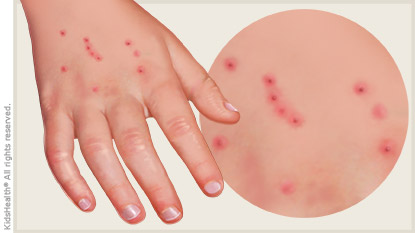
Bedbug Bites https://kidshealth.org/en/parents/bedbugs.html?ref=search : Bedbug bites look like small, itchy red bumps all over. Sometimes they look like little blisters with fluid inside them. Typically they are small like pimples, not as big as mosquito bites. It helps to know if there are bedbugs where the person has been sleeping/living. There is no treatment to get rid of them but you can treat the symptoms with anti-itch creams (Hydrocortisone) and antihistamine medicine (Benadryl). The most important thing for dealing with bed bug bites is to eliminate the bedbugs from the home which should be done by calling a professional exterminator who manages bedbug infestations. If you are living in a shelter or place you don’t have control over like a hotel then report the issue to management. If bedbugs are seen in a school building then the maintenance staff will see that the exterminator handles the situation.

Bedbug Bites

Ringworm https://kidshealth.org/en/parents/fungal-ringworm.html?ref=search : Ringworm is a fungal skin infection. It usually looks like a reddish circle on the skin with a clear center, or sometimes whitish in the center. It can be itchy. Often you will see just one spot but sometimes there are multiple areas of infection. frequently it is in the hair/scalp but can show up anywhere on the body. It is highly contagious by contact with the rash so it must be treated as soon as it is seen and covered with a bandage if possible. Your child can not come back to school until they have been treated for at least 24 hours. Ringworm is treated with a prescription antifungal cream and sometimes an oral antifungal medicine.

Tinea corporis (ringworm) SOURCE: Basil J. Zitelli, et al (2002). Atlas of Pediatric Physical Diagnosis, 4th Ed. “Ch. 8 Dermatology,” Page 272, Figure 8-33. 2) Thomas B. Fitzpatrick, et al (2001). Color Atlas & Synopsis of Clinical Dermatology, 4th Ed. “Tinea Corporis,” Pg. 696, Figure 21-9.

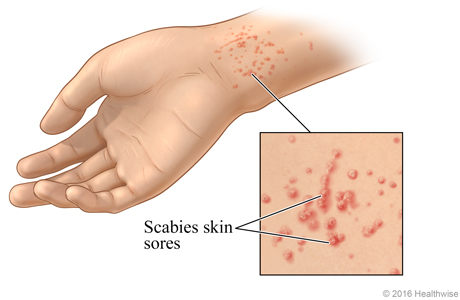
Scabies https://kidshealth.org/en/parents/scabies.html?ref=search : Scabies are little skin mites that burrow under your skin. The bites usually look like small blister-like pimples in clusters, often with grayish or red lines in between them. They burrow under the skin and travel leaving the lines on the skin (I know, I know, I’m itchy now too!) Scabies is very contagious and needs to be treated by a doctor as soon as possible. Usually the treatment is a prescription lotion that is spread over the entire body and left on for several hours before rinsing it off. It is recommended that anyone who has been in close physical contact with that person should also be treated.

Scabies

Infection/Abscess https://kidshealth.org/en/parents/mrsa.html?ref=search : Usually something that is infected will be very red, painful, feel hot in the area where there is infection and likely have drainage (pus). The person sometimes will get a fever or red lines on the skin going away from the area. The infection could be anything from picking at a fingernail or a bug bite that got scratched open, to any cut or wound that gets a bacteria in it. Some infections are contagious such as MRSA (Methicillin Resistant Staph Aureus) but most of the time we just have bacteria everywhere and it gets in a wound. This is why we need to keep wounds clean and avoid infection. These must be seen by a doctor and treated – usually with antibiotics.

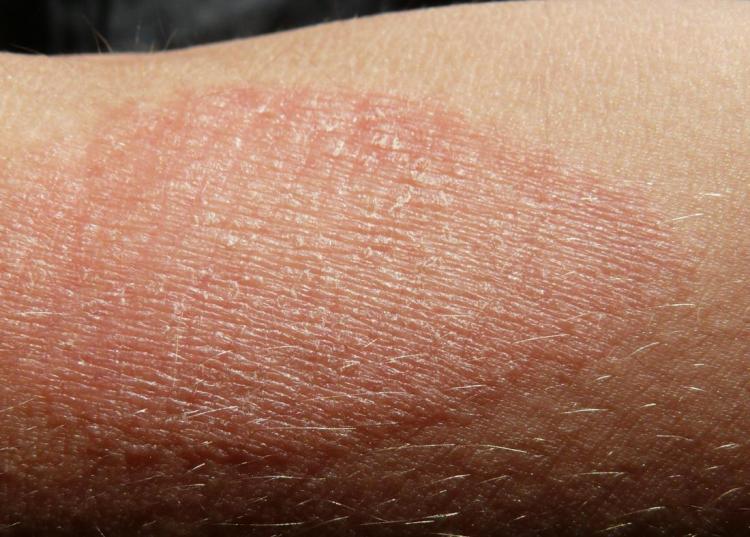
Eczema https://kidshealth.org/en/parents/eczema-atopic-dermatitis.html?ref=search : A very common skin disorder, usually has red/pink itchy scaly patches on the skin. It can be genetic, or associated with some allergies (food, seasonal). It is not contagious. Eczema is usually treated with various creams – over the counter moisturizing creams and sometimes prescription steroid cream or allergy medicine. People who have frequent flare ups may learn what the triggers are for their flare ups and learn to avoid them.

Eczema

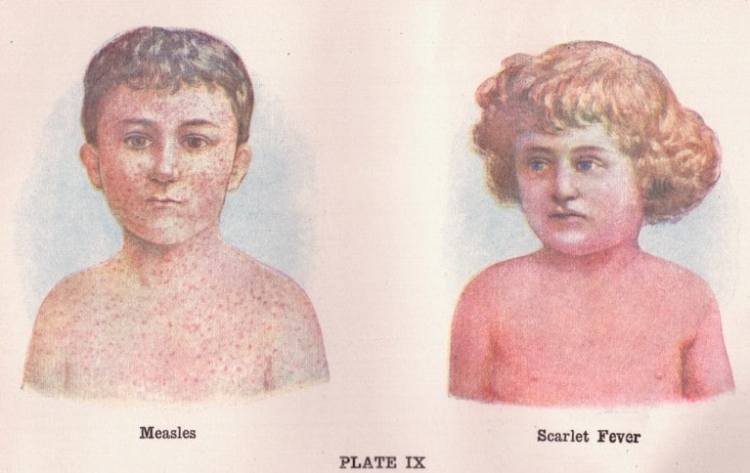
Measles https://kidshealth.org/en/parents/measles.html?ref=search : Usually starts out with a high fever, cough, runny nose and red watery eyes. After a few days the rash appears looking like tons of red spots, some flat and some raised, so many that the spots join together. The rash usually starts in the hairline and face and spreads downward. Measles is extremely contagious and can be very dangerous for some people to be exposed to. In order to attend school all students should be vaccinated against it with two doses of the vaccine.

Measles

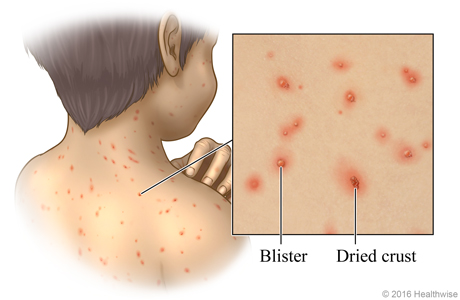
Chickenpox https://kidshealth.org/en/parents/chicken-pox.html?ref=search : Chickenpox usually starts out kind of like the flu – fever, cough, achy, swollen glands, etc. The rash looks like raised fluid filled blisters that are very itchy. They can show up anywhere but most often on the abdomen and back. It is very contagious – so much so that most doctors do NOT want you to come to the office and expose everyone there. Again, in order to attend school students should have two doses of the vaccine or have had chickenpox already so they are immune. There is no treatment but waiting for the virus to pass and treating the symptoms (cream for itchies, Motrin for fevers)

Chickenpox

Bug bites: does your kid have random red bumps here and there? Probably itchy? Maybe hurts a little? Otherwise well appearing and feeling? It’s probably a bug bite but who knows what bug it was? Certainly not me! It could be mosquitoes, fleas, or maybe spiders. We can put on some Hydrocortisone and hope for the best.

Scarlet Fever https://kidshealth.org/en/parents/scarlet-fever.html?ref=search : Scarlet fever gets a bad rap. It is literally strep throat that causes a rash in some people. Scarlet fever rash looks like tiny red dots on the chest, belly and back (but can spread all over) and the rash feels like sand on the skin if you feel it. It is usually accompanied by strep symptoms like sore throat, fever, stomachache, headache, or vomiting. Scarlet fever/strep is treated with antibiotics.

Measles vs Scarlet Fever

There are so many more rashes and conditions I could get into but these are some fairly common ones we encounter in a school population.

Look at your child’s overall condition to decide what to do. Are they feverish? Are they sick appearing? What other symptoms do they have, if any? If in doubt, don’t be afraid to call the doctor and see what they have to say.

This is an article all about rashes from Kidshealth.org that is really helpful too: https://kidshealth.org/en/parents/rashes-sheet.html?ref=search

UPDATE! I am adding this awesome video that gives a great visual explanation of many childhood dermatology concerns.

Your Kid Needs Immunizations For School: What You Need to Know.

So your child has started school, or started at a new school. You’ve provided all the information they asked for but the school nurse calls and sends a letter home saying that your kid needs immunizations. *Eye roll*, you thought you were all set but now you have to make a doctors appointment and drag everyone over there to get shots and no one is happy about it.

So whats the deal with this? What shots does your kid need? Why do they need more of them? Why can’t they just go to school with the ones they already have? Why do they even need to have any of them at all?

There is a lot of chatter in recent years about whether or not to vaccinate and what’s wrong (or right) about doing it but the fact is that whether or not you want to vaccinate, if you want your child to attend most schools aside from home-school or cyber school, you’re gonna have to get the important vaccines. There are currently options for exemptions from them which I will get into in a bit, but some of those exemptions are already in question and may not fly for much longer.

So why does your kid need vaccines? The short answer is that vaccines help protect people from getting certain diseases or illnesses. While nothing is 100% effective, they are pretty good at keeping those illnesses away or at least making it so that if you DO get one of them it will be far milder than if you had no vaccines. Another reason is that there are people who can not get immunizations for medical reasons (too young, allergic to the vaccine, has a health problem that the vaccine would make them really sick) so when other people are protected it helps protect those people who can’t be vaccinated.

What do vaccines even do? When you are given a vaccine, they are giving your body either a synthetic (created in a lab) or a weakened live version of the thing they are vaccinating against. Your body finds out that there is an “invader” and goes after that germ to fight it and get rid of it. The great thing about or bodies is that once we have fought off that germ, our blood cells remember it and fight it off very quickly if we ever get exposed again. This is one reason why we sometimes get a little bit sick after getting vaccines – your body is building an immunity so it can fight better later.

So what vaccines does your kid need to go to school? There are CDC and Academy of Pediatrics recommendations that are nationwide, and recommendations that may differ from one district to another for what immunizations your child needs to attend school. The requirements for my district are:

  • DTaP (Diphtheria, Tetanus, Pertussis) https://www.cdc.gov/vaccines/hcp/vis/vis-statements/dtap.pdf : Diphtheria is a potentially fatal disease that affects your throat and swallowing. It can cause damage to your heart and death. It is mostly gone now because of the vaccine. Tetanus is the disease we all know about that you can get from a rusty nail or other dirty cuts. It causes severe and painful contractions of muscles and can cause death. It is also rare because of the vaccine. Pertussis is better known as Whooping Cough which is a very serious respiratory illness. It has made a comeback in recent years and it is recommended that we all get booster shots for this. It is required that kids have 5 DTaP shots – the last one being after their 4th birthday.
  • Polio https://www.cdc.gov/vaccines/hcp/vis/vis-statements/ipv.pdf : Polio is a virus that affects your spinal cord and can cause permanent paralysis or disablement. It can be deadly. It is also pretty rare now because of the vaccine. The requirement is 4 Polio vaccines, the last one after the 4th birthday.
  • Hepatitis B https://www.cdc.gov/vaccines/hcp/vis/vis-statements/hep-b.pdf : Hepatitis B is an infection of the liver. It is usually acquired by an infected needle stick, sharing of infected needles, sexual contact, or passed from mother to baby during pregnancy. It can cause permanent damage to your liver and lead to liver failure. It is wise to have the vaccines as infants or children well before potential exposure. It is required to have 3 doses at a specific interval.
  • MMR (Measles, Mumps, Rubella) https://www.cdc.gov/vaccines/hcp/vis/vis-statements/mmr.pdf : Measles is a respiratory virus that causes a rash, fever and potentially can lead to encephalitis (infection in the brain) and pneumonia. It is rare because of the vaccine but still around with recent outbreaks across America. Mumps is a viral infection of the salivary glands in the mouth and neck. It can lead to hearing loss. Rubella, also known as German Measles is similar to Measles. Students are required to have two MMR vaccines – one after the 1st birthday and one after the 4th birthday.
  • Varicella (Chickenpox) https://www.cdc.gov/vaccines/hcp/vis/vis-statements/varicella.pdf : Chickenpox is a respiratory virus that has a very itchy blistery rash all over, fever and cough. While usually thought of as a relatively mild childhood disease that we all had, it can lead to pneumonia, infection and death. Students are required to have 2 vaccines – one after the 1st birthday and one after the 4th birthday.
  • Tdap (Tetanus, Diphtheria, Pertussis) https://www.cdc.gov/vaccines/hcp/vis/vis-statements/tdap.pdf : a booster of the DTaP that is given after the 11th birthday.
  • Meningococcal (MCV4, MenB) https://www.cdc.gov/vaccines/hcp/vis/vis-statements/mening.pdf : Meningitis is an infection in the brain and spinal cord. It can be deadly. It is highly contagious and spreads easily in places like school, college, camp, home, or prisons where people are in close proximity to each other for extended periods of time. The MCV4 is required at ages 11 and 16. MenB is not required by every district but it is wise to get.
  • Additional immunizations that are not required by most schools but are part of the routine immunization schedule and wise to receive are: Pneumococcal (4 doses), Hib (Haemophilus Influenza, 4 doses), Rotavirus (3 doses before 9 months old), HPV (Human Papillomavirus, 3 doses), and Flu shot (1 dose every year).
  • This is the recommended schedule by the CDC: https://www.cdc.gov/vaccines/parents/downloads/parent-ver-sch-0-6yrs.pdf https://www.cdc.gov/vaccines/schedules/downloads/teen/parent-version-schedule-7-18yrs.pdf
  • This explains all the diseases that we should be vaccinated against: https://www.cdc.gov/vaccines/schedules/easy-to-read/adolescent-easyread.html#vpd

In order to attend school in my district, your child is required to have at least one of all the required vaccines for their age and also a written plan for getting the rest of them. If you do not get the required immunizations or have a schedule planned with the doctor then the district has the right to exclude your child from school until plans have been made or vaccines have been given.

This will link you to the Philadelphia School District web page about immunizations including forms you may need and what is required: https://www.philasd.org/studenthealth/immunizations/

You may choose to defer immunizations for religious or medical reasons. Medical reasons usually consist of an allergy to a vaccine, a person who has a poor immune system and the doctor says it would not be safe to get those vaccines, or the doctor feels that they have had enough to be immune to that disease. Be aware if you do choose this and there is an outbreak of anything your child is not immunized against that they will not be allowed to come to school during that outbreak, even if they are well. There is a specific legal form that must be filled out and presented to the school nurse for exemptions to be allowed.

There is also an option for “philosophical exemption” currently but that may not be permitted soon, and is already not permitted in some states.

There are multiple options for getting the vaccines needed. You can go to your pediatrician for a routine checkup and get them then, or schedule a visit for just the vaccines. Your school nurse can help you find a public health center if you don’t have a pediatrician or if you don’t have insurance. Your school nurse or public health center can also help you with insurance if that is a problem. There are resources available to help those in need.

PCCY will help you with insurance and medical resources and referrals in Philadelphia: https://www.pccy.org/wp-content/uploads/2019/09/PCCY-Helpline-Flyer.pdf

You can find Philadelphia city health clinics here: https://www.phila.gov/services/mental-physical-health/city-health-centers/

https://www.gphainc.org/ Greater Philadelphia Health Action is a great resource in Philly for health care needs. They have medical, mental health and pharmacy.

TL/DR: Vaccines are helpful. Your kid needs vaccines for school. Talk to your school nurse for specific information.

Is Your Kid Too Sick to Go to School?

“I’m siiiiick!” says your kid, first thing in the morning when it’s time to get ready for school. Now what? Do you call out of work and keep them home? Do you just send them in and hope for the best? When is your kid too sick to go to school? and why can’t they go to school when they are sick?

Sick kids do not learn well. Sick kids get everyone else sick. In addition to teaching the kids important things like frequent proper handwashing and how to cover their cough, it’s important to know when you should keep them away from everyone else. This list explains some reasons why sick kids should stay home.

  • Fever: If your child feels warm, check their temperature. The current guidelines say that if a child has a temperature of 100.4 or above they should not come to school and must stay out of school until their temperature is normal (below 100) for 24 hours without any fever-reducing medicine (Tylenol, Motrin). If they have a fever and you give medicine to bring it down, they still need to stay home! You can not give them Motrin/Tylenol and send them to school – you’re gonna get a phone call as soon as the fever comes back and have to pick them up anyway.
  • Diarrhea: Diarrhea is technically 3 or more loose bowel movements in a day. Often it is accompanied by stomach cramps, a fever, vomiting, and fatigue. There isn’t much you can do to stop it from happening since you shouldn’t really give kids antidiarrheal medicine, so you just have to wait for it to run its course and treat the side effects. They need rest, fluids to stay hydrated, bland foods (like the BRAT diet – bananas, rice, applesauce, and toast), and the comfort of their own toilet at home. They should stay out of school until they are at least 24 hours without diarrhea.
  • Vomiting: This pretty much speaks for itself. If your child is throwing up they need to stay home. Not only can they not learn very well while they are nauseous and throwing up but they will likely get everyone else sick too. The same information applies for vomiting as diarrhea – they need rest, fluids (sips of Pedialyte or Gatorade), bland foods (like the BRAT diet), and their own bed or couch to lay on until they feel better.
  • Cough: If your child has a cough you have a few things to consider about keeping them home or sending them to school. Why are they coughing? If they have simple seasonal allergies that you are managing then they can come to school (assuming they aren’t having a severe allergy attack with uncontrollable coughing). If they have asthma that is under control but having a bit of a flare then they can come to school and the school nurse can help manage asthma medications at school. If they are having a bad asthma flare that you are having a difficult time controlling then they need to see a doctor (pediatrician, urgent care, or emergency room) and not come to school until they are under control. If they are having cold symptoms including excessive coughing, excessive stuffy/runny nose, fevers, or vomiting from coughing so hard then they should stay home. Not only can they not concentrate on school and learning but they are going to get everyone else sick too.
  • Sore Throat: Sore throats can come from a lot of things. Sometimes it’s a simple scratchy throat from allergies or post-nasal drip (mucus that runs down the back of the throat from the nose) or even lots of yelling but sometimes the sore throat is bad and an indicator of a bigger issue such as Strep Throat. Strep is super contagious. It usually includes a sore throat, swollen red tonsils with difficulty swallowing, spots and white stuff on the tonsils (in the back of the throat) and fever. Sometimes strep also comes with stomachache and vomiting, headache, or a red spotty rash all over that feels rough like sandpaper. Strep rarely has a cough or congestion associated with it but sometimes you can have two things at once and also have a cold with your strep. The child needs to see the doctor and be tested and treated with antibiotics for strep. Your child needs to be treated for at least 24 hours for strep before they can return to school.
  • Rashes: Most rashes are no big deal and your child can probably come to school with no issue. Occasionally they get something that is contagious though. Rashes such as ringworm (a red circle with a clear center, itchy) MUST be treated before returning to school. A rash that looks like chickenpox (clear fluid-filled blisters, super itchy, accompanied by a fever and respiratory symptoms) MUST stay home until the blisters have crusted over and the other symptoms are gone. Scabies looks like small red pimples that often travel in a line on the skin and are itchy. The student must be treated by a doctor before returning to school. MRSA (Methicillin Resistant Staph Aureus) looks like inflamed pimples or abscesses on the skin. It is also very contagious and needs to be addressed by a doctor. I could go on forever about different rashes but that is for a different post.
  • Lice: Again, this one speaks for itself. The current protocol for my district (and I think many others) is that if your child is noted to have lice at school they may stay till the end of the day and then may not return to school until they have been treated and the parents bring proof that the child is treated. If they only have nits (eggs) they may come to school but it is super important to carefully comb through the hair and remove the eggs. See my other post about dealing with lice for more information.
  • Pinkeye: If your child has tons of discharge from their eye (more than normal eye sleepies), the eye is red and super itchy then definitely keep them home and have that looked at by a doctor.
  • An outbreak of vaccinatable disease that your child isn’t vaccinated for: It’s important that all students have a complete schedule of immunizations when attending school but sometimes they don’t for various reasons. If your child does not have full immunizations for something like Measles and there are cases of Measles known at your child’s school then your child will need to stay home until the outbreak is over. This is for their own safety and the safety of others to prevent more spread of the disease.
  • General Illness: You know your kid better than most other people so when your kid acts sick or says they are sick then listen to them and use your judgment if they seem like they would benefit from being home. Sometimes it’s a stomachache or a headache or they didn’t sleep well and you can see that they are in no condition to concentrate in school. While we want everyone to stay on track and have good attendance, we also don’t want them to be sick or unable to learn.

All of this being said, as the parent or guardian of the child/children in question you have to make yourself available to be contacted in the case that the school needs to call you. If your child has a fever at school, begins vomiting or having diarrhea, or anything else is noted, we absolutely must be able to contact you. Make sure the school has correct and current phone numbers, email addresses, and home addresses in case of an emergency. I know not everyone has a great support system, unfortunately, but try to have a backup babysitter just in case your child is sick and you can’t call out of work.

We also need to know about your kid. Get the health forms filled out and turn them in so we know what to expect with your child’s health and how to best care for them. Bring the medication forms and medications needed at school so we can help them in an emergency. Fill out the form that gives us permission to give your child Motrin or Tylenol – or state that you do not want us to, that’s up to you!

When in doubt, don’t be afraid to call your school nurse and ask!

I have included a link to an awesome website from Dupont Hospital that can give you a lot of information. https://kidshealth.org/en/parents/too-sick.html

TL/DR: Keep kids home from school if they are sick. Wash hands and cover coughs. Provide the school with emergency info like contact information and health forms.

Design a site like this with WordPress.com
Get started